Everyday diplomacy in universities
When you encounter potential conflicts in organisations, which are inevitable because groups always have different needs, interests and intentions, diplomacy is needed. Management involves diplomacy if we assume that this is political work between groups that enables some kind of movement towards a merging or at least intertwining of goals.
Diplomacy is normally seen as negotiation between nations. Claude AI claims:
‘Diplomacy is the art and practice of managing international relations through dialogue, negotiation, and peaceful means. It serves as the primary tool for nations to pursue their interests, resolve conflicts, and build cooperative relationships without resorting to force.’
But AI suffers the same problem as dictionaries. It acts as a mirror to received wisdom from partial sources of knowledge, often privileging Western Euro-US orthodoxy – the ones most prominent on the internet in the case of AI. The AI bias can inflate the power of elites.
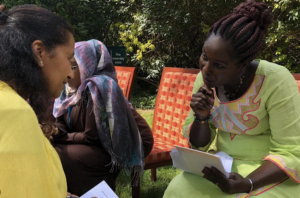
Recently scholars have expanded the idea of diplomacy to non-state and non-elite actors even in more intimate situations. Marsden, Ibañez-Tirado, and Henig (2016)edited a special issue on everyday diplomacy arguing that the ‘everyday’ includes the mundane, the ordinary and repetitive processes that often get ignored in official accounts, but could also entail ruptures or departures from the norm of social and political relations. Diplomatic skills involve mediation, communication, persuasion, dissuasion, negotiation and might include actions at any level – elite or non-elite, working together or separately or in opposition. It involves negotiations between friends and enemies, organised in groups with conflicting interests, and how it unfolds is always shaped by both formal and informal power and authority. It can be peaceful or violent (at least verbally), and it is usually tense for those centrally involved.
Recently I have been involved in a series of diplomatic missions. First as Head of the School of Anthropology, Media and Gender in an university, I often find myself in situations that require me to advocate on behalf of my departments in other spaces in the University. It feels as if I represent the department in university spaces, and the university in departmental spaces. I was also elected by Senate to represent academic Senators on the SOAS Board of Trustees for three years, often arguing that academics should focus on teaching and research and less on administrative work. Over the last few years I have been commissioned by the Vice-Chancellor to undertake a series of diplomatic tasks to enable agreements across Senate, by facilitating some away days about how we work and, a few months ago, helping to craft a statement about the genocide in Gaza, for example. This involved consulting with various academics with experience of Israel/Palestine for whom the process was painful and fraught.
Everyday diplomacy in organisations is difficult to write about because research ethics demands that you need consent to research and write about people, and that is hard to get if you are writing about 100s of people. Diplomacy concerns matters of significance to people, otherwise you wouldn’t need it, and the difficulty of representing those views, interests and emotions faithfully in a text is challenging. Even writing about individual and groups of people as an anthropologist involves some of the same processes of diplomacy, bringing us up against the inevitable ethical and political impossibility of fulfilling the claim of representation if taken literally.
The anthropologists, media scholars, and gender scholars, and professional staff, in my three departments are diverse in age, race, gender, sexuality, national origin, temperament, intellectual interest, political and moral values, and much more besides. How can I possibly represent or even know what they want, feel, think or need in any given moment? Desires, aspirations and priorities shift over time, people influence each other, some people are more vocal in explaining their views than others. How can I represent them faithfully in university spaces or even in this brief blog?
To reveal more about individuals I work with would be unethical here, because I haven’t negotiated such a process (and am too busy with admin to do so), but I can point to some key relational processes that I find myself involved in when doing diplomatic work in an university:
- A mandate: a diplomat has a mandate usually requiring negotiation with another diplomat with a different, and usually conflicting, mandate. But sometimes these two mandates can reside in the same person: a university middle manager squeezed between their staff and senior management, the peace negotiator who facilitates discussion between two sides, a lawyer acting for two families and trying to keep it all out of court.
- Incentives and pressures: research is a vital part of any political work and when doing diplomacy, it goes along faster and sticks more reliably if you understand what incentives and leverage are likely to influence participants. Assumptions based on crude generalisations about human nature – based on rational choice theories conceiving of individuals as self-interested, for example – will infuriate and waste time. People’s motivations are varied, changeable, dynamic and sometimes contradictory. That is why you have to find out what will work effectively as leverage, discuss whether it is ethical and keep reviewing. In our department people want to see solutions, for example to workload allocation, that are both fair as if we are all roughly the same but caring in the sense of taking into account diversity of circumstances.
- Document crafting: when advocating for the interests of my department, I often resort to writing papers, for at least two main reasons. First, if critiquing some aspects of what is going on somewhere in the university it is invariably complex so needs careful explanation in written form. Then people can read it when they chose, if they can find some minutes in their insanely packed days. Secondly, I sometimes need to convince more senior management, or other parts of the university, by providing evidence – examples, stories, statistics or whatever is needed to make my case. If my diplomatic mission fails that time, at least I have the document with the argument and evidence set out so that I can try again later. (If you want to read interesting scholarship on the centrality of documents to many professions, I’d recommend Documents: Artifacts of Modern Knowledge edited by by Annelise Riles.
- Navigating public vs private: Diplomacy always requires attention to what is usefully done in public and what in private. James Scott writes about how there are public transcripts, and hidden ones that often express resistance to the dominant ones, but this is obviously a simplification put in this way. There are often transcripts shared by a whole organisation, by factions within it, and by small groups, and between two people – in practice there are multi-layered publics, semi publics and different sized privates. Diplomacy means thinking very hard indeed about what to reveal to whom in what meetings, in part because confidentiality is often required by certain people. When specific individuals or groups repeatedly face abuse or violence, then you have to protect them more than others.
- Establishing trust: It is a cliché that all political work, including diplomacy requires trust, but the explanation of what this involves often misses the everyday relational aspects of this. Avoiding the reductionist, simplistic versions of what others are experiencing – and recognizing the political, emotional and moral complexity for others – is vital. Strategic ignorance, where you reduce multiple motives or identities within a group to one, is a process commonly found in politics, as Gershon and Raj (2000) reveal, and you have to deal with it in diplomacy. People in conflict with each other often resort to trying to trash the credibility of the other group by producing what Elias and Scotson calls blame gossip. “You can’t trust their motives or what they say”, opponents convey about each other through allegations – and diplomats are unwise to get drawn into this. You will lose your own credibility as a diplomatic if you pretend to agree with simplistic versions when talking to one side and then do the same with the other side. Such dishonest inconsistency will leak out – through more gossip – so knowledge integrity is vital to decent diplomatic work.
- Calm in troubled waters: appearing relatively calm in the face of the waxing and waning of intense emotions – anger, disappointment, resentment, sadness – is part of the work of a diplomat. Bhrigupati Singh, one of my anthropologist colleagues, writes about how this is part of doing research too: ‘To speak of human vitality, of the capacity for action, as I see it, is not necessarily to paint a “positive” picture of life (as opposed to say, the negative dialectic of redemption and catastrophe) but rather to inhabit a flux and a movement of forces, that may also involve forms of being toward death or a loss of vitality.’ Performing an excessive or stuck positivity or negativity as a diplomatic is not going to go well.
How then can we be enthusiastic about this kind of work when it can be draining and often invisible? One of my PhD students, Steve Boyd, writes about how to enable enthusiasm in others. Enthusiasm’s original meaning was divine inspiration. How might this work without god for us atheists? He writes ‘Enthusiasm is a deeply personal experience, involving visceral investments that radiate within us and outward; yet its durable expression can be found in its relational continuity.’ In any kind of work that involves working in groups, enthusiasm emerges not just in an individual mind/body, but in the relationship between people: it is a social process.
At a time when social bonds are weakening, alienation and social withdrawal are becoming pervasive (see Jaeggi on alienation, 2014), and allies are turning against each other (with the collapse of NATO but that might change next week), we need to recover relational enthusiasm. Cold-hearted solidarity is not enough. We need to find resonance with the world, Rosa (2019) persuades me, and to do that we need to get into dialogue with each other. Maybe an interesting question for groups in any work setting is this: How do we recover some sense of professional intimacy with each other, if we are becoming alienated and depressed, and especially with those who we are beginning to see as our enemies?